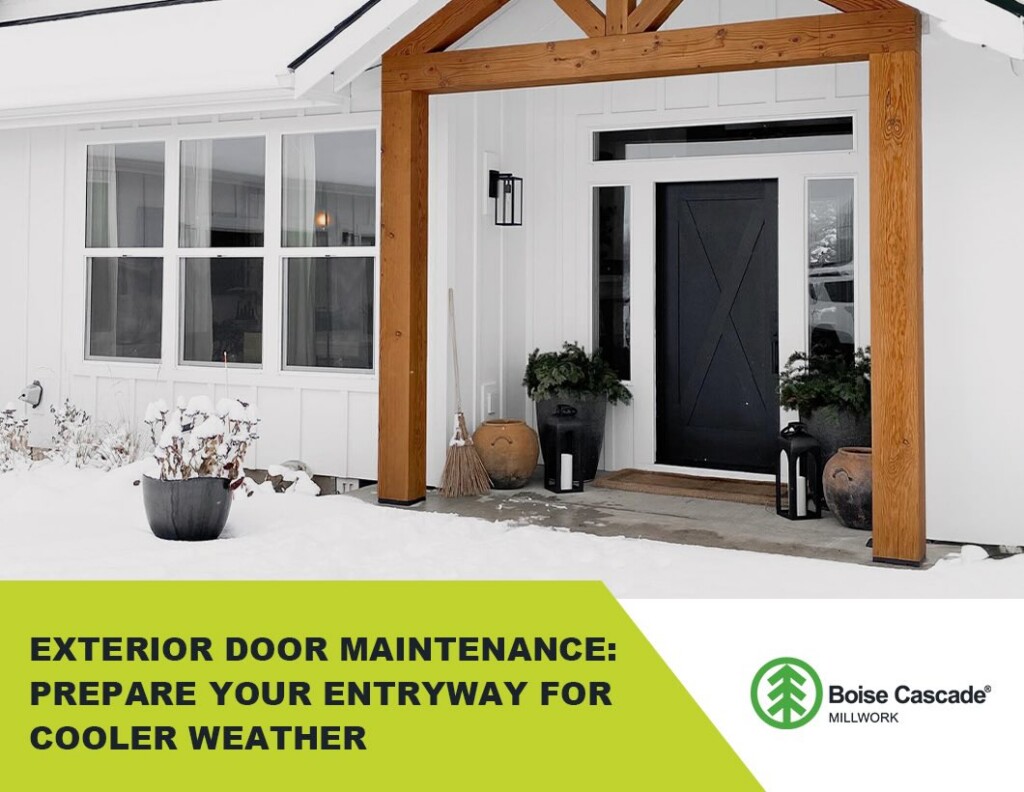
As temperatures drop, a little exterior door maintenance can help prepare your entryway for colder months. Fall is a good time to winterize your front door: look for wear, clear away debris, and make adjustments winter weather makes minor issues more noticeable.
The key is to think beyond the door slab itself. A complete entry is a system made up of the door, frame, weatherstripping, threshold, hardware, glass, and finish. Each component plays a role in comfort, weather resistance, operation, and appearance. Understanding the parts of an exterior door system can make a seasonal inspection easier and help homeowners recognize when routine entry door maintenance may be enough and when a larger repair or replacement should be evaluated.
Begin by looking at the door and frame from both inside and outside the home. Check for cracks, warping, gaps, deterioration, or other changes. Pay particular attention to the jamb and lower portions of the frame, where moisture and debris can collect.
Then open and close the door several times. It should move smoothly without rubbing, sticking, or requiring unusual force. A door that becomes difficult to operate may involve the hinges, frame, threshold, or other parts of the entry system, so consider how the unit functions.
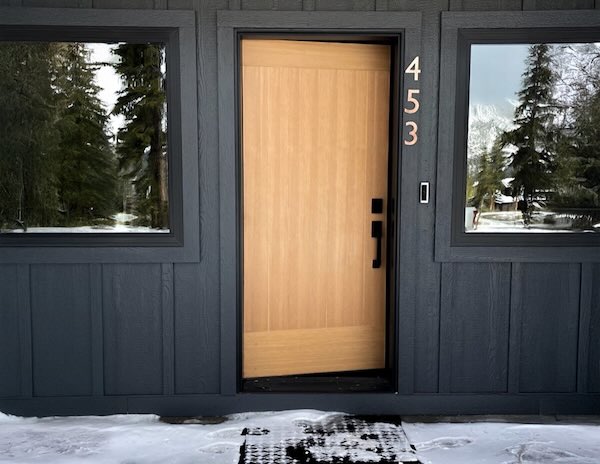
A cool or windy day can make drafts easier to detect. Feel around the perimeter of the closed door for moving air and look for visible daylight between the door and frame. Gaps can make the entryway less comfortable and reduce the effectiveness of the door system as a weather barrier.
Persistent drafts can have several causes. Worn weatherstripping, an improperly adjusted threshold, a damaged sweep, or a door that no longer fits the frame correctly can all contribute. Finding where air enters helps identify which part of the system needs attention.
Weatherstripping, the bottom sweep, and the threshold work together to help create a consistent seal. Because these components experience regular contact, they are an important part of fall and winter door maintenance.
Check weatherstripping around the door for sections that are flattened, cracked, loose, torn, or missing. Damaged material may no longer create an even seal when the door is closed. Replacement weatherstripping should fit the door system correctly and allow the door to close and latch without excessive force.
Inspect the sweep along the bottom edge of the door for wear and gaps. It should make appropriate contact with the threshold while still allowing the door to operate smoothly. If the sweep is damaged or no longer reaches the threshold consistently, it may allow air, moisture, or debris to enter at the bottom of the opening.
Make sure the threshold is secure, clean, and properly aligned. Dirt, leaves, grit, and other debris can interfere with the seal or make the door more difficult to operate. If the threshold is adjustable, follow the door manufacturer’s recommendations rather than raising it so far that it creates unnecessary friction against the sweep.
The seal around the outside of the frame is another area to check before colder weather arrives. Inspect exterior caulk around the frame and trim for cracks, shrinkage, separation, or missing sections that could allow air or moisture around the entry system.
When resealing is needed, use a product designed for the exterior application and follow the product manufacturer’s and door manufacturer’s recommendations.
Seasonal maintenance should include the hardware that keeps the door moving, aligned, and secure. Check hinges, handles, and other visible hardware for looseness. Test the lock and deadbolt to make sure they engage smoothly without requiring the door to be lifted, pushed, or pulled into position.
If the entry uses a multi-point locking system, inspect and maintain it according to the manufacturer’s instructions. Avoid over-lubricating hardware or applying products that are not recommended for the door system, since the wrong product can attract debris or damage nearby finishes.
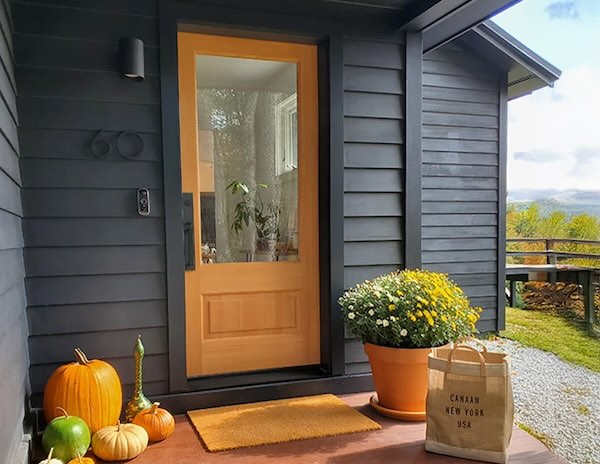
If the entry includes decorative glass, sidelites, or a transom, include those components in the inspection. Clean the glass using methods recommended for the product and look around the glazing for visible changes or damage.
Condensation on the interior or exterior glass surface can occur under certain temperature and humidity conditions. Condensation between the panes, however, may indicate a failed insulated glass seal. A door professional or dealer can help determine whether the glass unit should be evaluated.
A clean, maintained finish does more than support curb appeal. It also helps protect the door surface from moisture and seasonal exposure. Before winter, remove dirt and environmental buildup, then inspect painted or stained areas for fading, peeling, cracking, scratches, or exposed material.
Care requirements can vary by door material and finish, so follow the manufacturer’s cleaning, touch-up, and refinishing instructions. Homeowners considering a new factory-applied finish can also explore Boise Cascade Millwork’s finish options, including PrismaGuard® Premium Finish and the Boise Cascade Symphony Collection®.
The condition of the space around the door can affect the entry system, too. Clear leaves and debris away from the threshold and nearby drainage areas so water has a path away from the opening. Check gutters and downspouts to make sure they are not directing water toward the door, frame, or landing.
Trim vegetation that continually holds moisture against the door or surrounding trim. While you are there, check exterior lighting as daylight hours become shorter. These simple tasks help prepare the entire entrance for fall and winter.
Routine exterior door maintenance can address many small issues, but some conditions call for professional evaluation. Persistent drafts, significant warping or deterioration, water infiltration, rot or extensive frame damage, difficulty locking or closing the door, and failed insulated glass can all indicate a larger problem.
An older entry system with recurring performance issues may also be worth evaluating as a whole. If the current door can no longer provide the performance, security, or appearance the homeowner wants, it may be time to compare exterior door options rather than continuing to address the same symptoms. Homeowners weighing that decision can also learn more about the potential value of front door replacement.

A short fall inspection can help an entry system perform more consistently as temperatures drop. Check the door and frame, look for drafts, inspect seals and hardware, clean the glass, maintain the finish, and keep the surrounding area clear of moisture and debris. Looking for a new entry door or replacement components? Use the Boise Cascade Millwork dealer locator to find a dealer near you and Transcend the Threshold® with an entryway built for the way you live.
Add the entry to your fall home maintenance checklist. Start by checking the door and frame for gaps or warping, then inspect the weatherstripping, door sweep and threshold. Knowing how to seal doors for winter also means resealing cracked exterior caulk around the frame. Finish by testing the hardware, cleaning the finish and clearing debris so water drains away from the entry.
A draft usually means there’s a gap in the front door seal. Worn or flattened weatherstripping, a damaged door sweep, a threshold that’s out of adjustment, or a door that no longer fits its frame can all let cold air in. On a cool, windy day, feel around the closed door and look for daylight to find where the air gets in.
Look for weatherstripping that’s flattened, cracked, torn, loose or missing, and a door sweep that no longer touches the threshold evenly. Daylight or moving air at the bottom of the door means the seal isn’t working. Door weatherproofing works best when the weatherstripping, sweep and threshold seal together. Replacement parts should fit the door system so the door still closes and latches without extra force.
Many exterior doors have an adjustable threshold, so follow the door manufacturer’s instructions. Raise it just enough for the sweep to make even contact, because going too far creates friction and makes the door hard to close. If adjusting the threshold doesn’t stop the draft, ask a door professional or dealer to check the full entry system.